

ElectroStatics Inc.
63 East Broad Street – Suite 6
Hatfield, PA 19440
For Additional Support:
By Email sales@electrostatics.com
By Phone – +1 (215) 513-0850 (call) or 267-222-8390 (call)
By Fax – 1-215-513-0855 or 1- 267-222-8638
Important FAQ and best practices that apply to all our static control or anti static ionizers.
Ground:
Ground is very important for the safe and proper operation of our products.
All static control ionizers need to be plugged into a properly grounded outlet or power strip. If there is any questions if an outlet is properly grounded contact a licensed electrician.
A surge protector is not a power strip. Static control ionizers will not work properly if plugged into a surge protector.
The power supply has a ground stud between the 2 high voltages female power ports. The stud is wired directly to the ground wire on the plug. Connect the ground wire from the ionizer to the stud on the power supply when mounting an ionizer such as a static bar or when installing an ionization blow off gun
Manuals:
Hard copy manuals are shipped with all of our products.
For pdf copy of a product manual use our contact page
General Mounting Considerations:
In general the closer the ionizer is the target material the more effective it will be.
Products that use compressed air such as our static bars with air boost or our static control blow off guns and our fan driven ionization blower operate at great distances depending on the volume and pressure of the air supplied.
Products with fans such as our industrial anti static blowers also operate at a greater range.
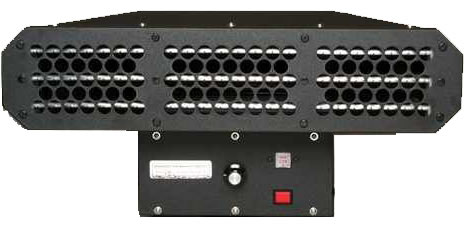
A clear line of sight without obstruction is best.
Air gap behind target material.
If the target material is flat against a roller or other conductive material the static field will collapse and the ions from the ionizer will not see the static charge. There must be an air gap behind the target material for the ionizer to work.
Factory testing and repair
ElectroStatics, Inc offers free testing of all of its products at the factory. Because of the durable design most products from Electrostatics Inc can be repaired or re-manufactured. Contact us about getting your product tested.
AC vs DC ionizer
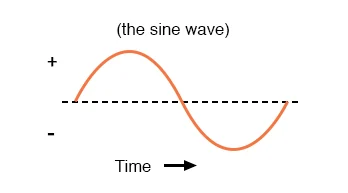
AC ionizers produces both positive and negative polarity ions based on what part of the sine wave is being fed to the transformer. As a practical matter the useful ionization is when the voltage is above ~1200-1500 volts so only the top part of the wave are effective. They are practical, reliable and cost effective power sources to remove static electricity in industrial applications such as printing, plastics, injection molding, blow molding, packaging, medical device packaging
DC ionizers produce one polarity positive (+) or negative (-) depending on how they are designed. For ionizers used to remove static electricity two DC power sources are needed one of each polarity. DC ionizers tend to be smaller lighter, and cost less and can be powered by DC control voltages or AC power sources. They also offer better control of balance or control versus AC ionizers. DC ionizers are very effective in ESD ionization applications where there are moderate static charges and the goal to bring the charge to as close to zero as possible, DC ionizers also tend not to generate as much ionization current needed to reduce high static charges quickly when compared to AC ionizers.
DC ionizers used put static into an application. There are many applications where static is used to temporarily hold material in place such as for label placement or lamination. These DC power sources are more expensive, heavier and have more capacity than the DC ionizers used to remove static electricity in ESD applications.